Flat Roofs That Handle Ponding and Foot Traffic
Commercial Flat Roofing in Hamilton and surroudning areas for low-slope buildings, industrial facilities, or properties with rooftop HVAC equipment
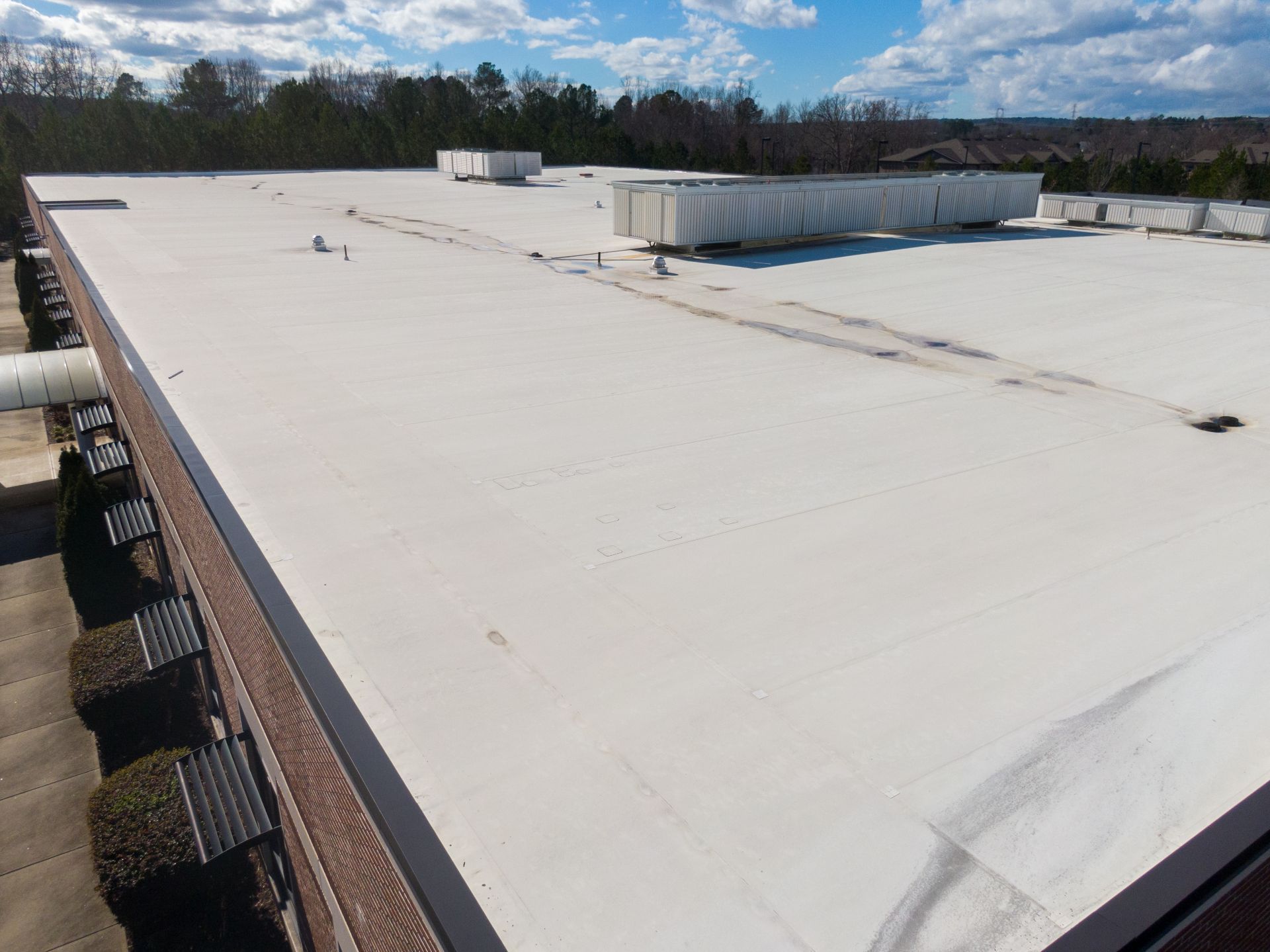
Low-slope commercial roofs experience ponding water after rainfall because gravity does not drain water as quickly as on steep residential pitches. TPO roofing, EPDM roofing, and modified bitumen roofing systems are installed across flat and low-slope commercial buildings in Trenton by CrownMark Construction, each offering different seam attachment methods, puncture resistance, and UV durability. Flat roof installation involves creating a waterproof membrane that remains flexible across temperature swings and resists damage from foot traffic during routine HVAC maintenance.
Flat roof replacement begins with removing the existing membrane, inspecting insulation boards and the structural deck for water damage, and replacing saturated sections before installing new TPO, EPDM, or modified bitumen systems. Leak detection on flat roofs requires identifying failed seams, punctures from rooftop equipment, or areas where ponding water has degraded the membrane faster than properly drained sections.
Schedule a roof inspection to assess membrane condition, identify leak sources, and determine whether repairs or full replacement is the appropriate solution.
Why Flat Roof Systems Fail and How to Prevent It
TPO roofing uses heat-welded seams that create a continuous waterproof barrier, while EPDM roofing relies on adhesive or tape seams that can separate if not cleaned and prepared correctly during installation. Modified bitumen roofing involves torch-applied or cold-adhesive layers that bond to the substrate, offering better puncture resistance than single-ply membranes but requiring more labor to install and repair.
After flat roof repairs or replacement, ponding water drains faster if tapered insulation was added to create positive slope toward drains, and leaks no longer appear around HVAC curbs or roof penetrations where flashing was resealed. Commercial roof maintenance includes clearing drains of debris, inspecting seams for separation, and applying protective coatings in high-traffic areas to extend membrane lifespan before full replacement becomes necessary.
Waterproofing on flat roofs depends on continuous membrane integrity, meaning even small punctures or separated seams allow water to migrate across large areas of insulation before appearing as interior leaks. Repairs involve cutting out damaged sections, drying the substrate, and patching with compatible membrane material that is heat-welded or adhered to match the original installation method.
Answers to Frequent Service Questions
Building owners and property managers typically need information about membrane options, ponding water concerns, and maintenance intervals before committing to flat roof projects.
What causes ponding water on flat commercial roofs?
Ponding occurs when roof drains are undersized, tapered insulation was not installed to create slope, or structural deflection has created low spots where water collects and stays for more than 48 hours after rainfall.
How long do TPO and EPDM roofing systems last?
TPO membranes typically last 15 to 25 years depending on UV exposure and foot traffic, while EPDM systems often reach 20 to 30 years with proper installation and routine seam inspections.
Why do flat roofs leak around HVAC units?
Rooftop equipment sits on curbs that penetrate the roof membrane, and leaks develop where flashing separates from the curb or membrane due to thermal expansion, vibration, or improper sealing during installation.
Can flat roof leaks be repaired without full replacement?
Isolated leaks from punctures or small seam separations can be patched if the surrounding membrane is still flexible and adhered properly, but widespread cracking or saturated insulation usually requires full replacement.
What maintenance does a flat commercial roof need in Trenton?
Drains and scuppers should be cleared of debris quarterly, seams inspected annually for separation, and high-traffic areas around rooftop equipment checked for membrane wear that could lead to leaks.
CrownMark Construction provides commercial roof evaluations that include moisture scanning to detect trapped water in insulation and membrane core samples to assess remaining lifespan. Call (609) 964-8327 to arrange an inspection and receive a scope of work based on your building's current roof condition.